Blog | March 31, 2026

AI in warehousing

Where it creates value today – from yard to outbound

Warehouse logistics and distribution center operations illustration

AI-supported planning, decision-support tools and vision-enabled systems are already part of everyday operations – improving planning accuracy, speeding up execution and helping teams cope with increasing operational volatility.

Expectations, however, remain high. Not every initiative delivers the results organizations expect. In practice, AI projects often stall after initial pilots or remain confined to individual sites. In many cases, challenges stem from data quality issues, system integration or a mismatch between the solution and operational reality on the warehouse floor.

A more productive discussion starts with a simple question: where is AI an effective value driver and where does it fall short?

This blog takes an end-to-end view of intralogistics, examining how AI is applied across four core warehousing areas: yard management, receiving, warehouse execution and outbound operations. For each, we highlight practical examples delivering value along with the operational considerations needed to scale them. The focus is deliberately practical and grounded in operational reality.
1. AI in warehouse yard management: improving dock flow and trailer visibility

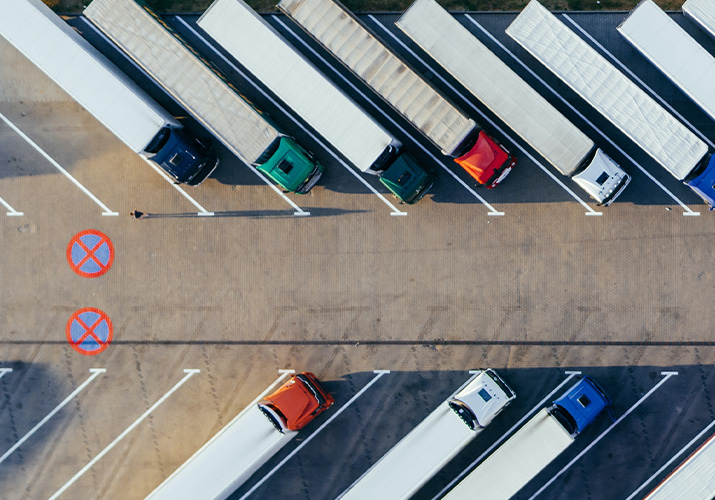
Yard operations rarely receive the same attention as warehouse automation, yet they strongly influence overall performance. Congestion at the gate, limited visibility into trailer positions or slow dock coordination can quickly affect throughput and service levels inside the facility.

Traditional yard management relies heavily on manual coordination and fixed rules. While this provides a basic level of control, it leaves limited flexibility to respond to variability. AI-supported solutions help close that gap by increasing visibility, reducing repetitive coordination tasks and enabling more adaptive decision-making.
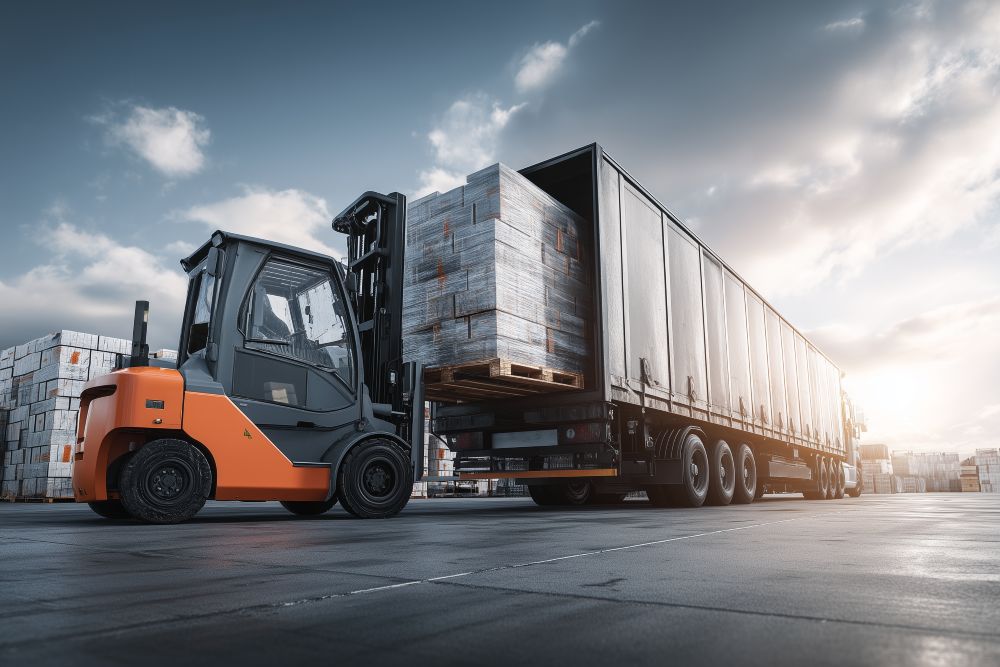
An emerging AI application in yard operations is gate automation. Smart gate solutions reduce manual check-in activities and improve data quality from the moment a truck arrives.

In practice, these systems typically support:

  • Automated capture of truck and trailer identifiers using cameras
  • Faster processing for recurring carriers or internal fleets
  • Driver self-check-in via mobile devices with options for multilingual support
  • Unattended or after-hours operation in drop-trailer environments while still allowing required physical checks

For high-volume sites, benefits include shorter queues at the gate, reduced dwell times and more reliable inbound data for downstream planning.

AI-supported camera systems provide continuous visibility into yard operations. Trailer locations, movements and dwell times are captured automatically, reducing the need for manual checks. Some AI-enabled solutions are camera-agnostic, offering more seamless integration with existing equipment.

When combined with historical data, this visibility supports more proactive yard management. Congestion and idle trailers can be identified earlier, giving planners and supervisors more time to respond.

Dock scheduling is another area where AI can replace static rules with adaptive logic. By continuously considering arrival times, priorities and available resources, AI-supported systems adjust dock assignments as conditions change.

Typical outcomes include:

  • Reduced waiting and detention times
  • Better use of dock doors
  • More stable labor planning at the dock
  • Smoother coordination between yard and warehouse teams

2. AI in warehouse receiving: streamlining inbound data accuracy and dock-to-stock efficiency

Receiving is the interface between physical flows and information systems. When inbound data is incomplete or inconsistent, the effects are immediate and inventory discrepancies increase. Planners then lose trust in system data and overall performance suffers.

AI’s main contribution is streamlining inbound workflows by making shipment information usable and verified before goods move past the dock.

Document processing is one of the most mature AI applications in intralogistics. These solutions extract and validate data from bills of lading (BOL), advance shipment notices (ASN) and packing lists, even when formats vary.

In practice, intelligent document processing:

  • Replaces manual data entry
  • Flags discrepancies early while a shipment is still at the dock
  • Speeds up dock-to-stock processes
  • Improves data consistency across enterprise resource planning (ERP) and warehouse management system (WMS) platforms

For most organizations, this is often the first AI use case to deliver clear and repeatable benefits.

Cameras can verify quantities, labels and visible damage as goods are received. When trained on stock keeping unit (SKU)-specific packaging, these systems can improve consistency and throughput compared to manual checks and create a digital record of inbound condition that can support claims handling and supplier quality audits.

More advanced setups combine document capture, image-based inspection and system validation in a single workflow at the dock. These setups require deeper integration but reduce handoffs and dramatically improve the quality of data in a WMS.

3. AI in warehouse execution: optimizing picking, labor planning and task coordination

Putaway, picking and replenishment account for a large share of warehouse operating costs. While automation is important, today's warehouse operations are coordinated by systems such as a warehouse management system (WMS), warehouse control system (WCS) or warehouse execution system (WES). AI’s real strength is providing intelligent input into these systems to better coordinate work across people and equipment.
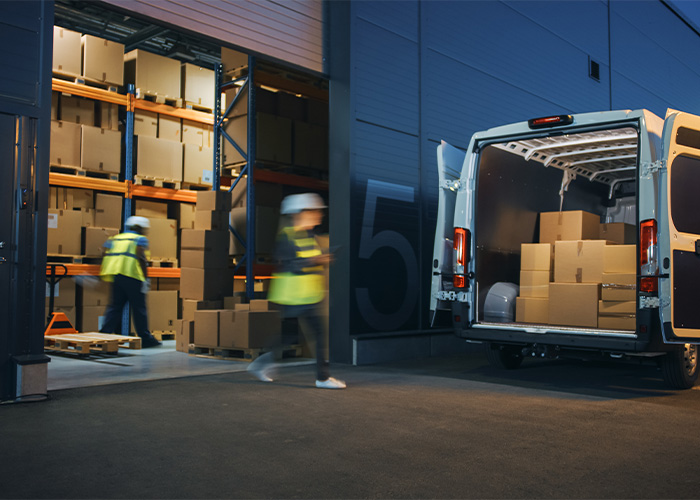
AI-supported labor management tools continuously adjust forecasts based on inbound volumes, outbound demand and short-term disruptions. This allows supervisors to shift labor between activities as priorities change during the day.

Effective orchestration considers skills, current workload and task urgency. The result is more stable productivity and less reliance on overtime or last-minute interventions.

AI-supported picking operations sequence tasks and batch orders to reduce travel distance and avoid congestion. 

By analyzing real-time data on order profiles, inventory locations and worker positions, AI algorithms feed optimized plans into the WMS/WES. These systems adapt throughout a shift as conditions change rather than relying on static plans and forecasts. For example, AI-enabled pick-by-voice, wearables or mobile devices that direct associates along the most efficient pick path.

For many operations, this leads to optimized pick paths, efficient wave balancing and improved throughput during peak periods.

Where automation is in use, AI helps coordinate tasks between machines and people. Predictive maintenance models reduce unplanned downtime by identifying early signs of wear or failure, directing equipment to diagnostic stations before breakdowns occur.

Where autonomous mobile robots (AMRs) or automated guided vehicles (AGVs) are already operating, AI helps coordinate task assignments between humans and robots and predicts mechanical failures before downtime occurs.

Drones and mobile scanners equipped with vision technology are increasingly used for cycle counting and location validation. By updating the WMS in near real time, these tools reduce discrepancies and limit the need for disruptive full inventory counts.

4. AI in outbound warehouse operations: advancing packaging, palletization and sortation

Some outbound operations involve a high degree of automation already. AI tends to create the most value in environments with high order variation, tight service requirements, high throughput and frequent operational changes.

Staging and loading often remain rule driven inside the WMS, so AI’s biggest outbound impacts show up earlier – packout, palletization and sortation – unless the WMS/WES exposes the right decision hooks for sequencing and exception handling.

AI-supported packout tools analyze order and SKU characteristics to recommend carton sizes and packing patterns. This reduces material usage, improves shipping density and lowers transportation costs.

In high-throughput, high-variable industries, on-demand, automated carton creation and labeling can be triggered from order attributes so the rightsized carton is produced. Performance hinges on clean item masters and unit of measure data.

Palletization solutions optimize pallet builds through AI-driven software using vision technology to create stable, mixed-SKU pallets that meet variable customer requirements. These systems can handle changing product mixes or highly dynamic environments.

For mixed-SKU, nonuniform packaging, AI can sequence case placement, respect stickability limits, and consolidate to multiple handling units. Return on investment (ROI) is strongest when throughput is high, sustained and upstream data is reliable. The latter being a prerequisite for effective deployment.

In operations with high e-commerce or parcel shipments, AI-supported sortation systems dynamically route items based on destination and service level. Modular designs allow capacity to scale during peak periods.

Vision-guided gripping combined with learning-based pick profiles enables automated handling of parcels and small cases, and modular robotics-as-a-service (RaaS) models support faster deployment to meet seasonal peaks.

Conclusion: applying AI with operational realism

AI is not a universal solution for every intralogistics challenge. Its effectiveness depends on stable processes, reliable data and thoughtful integration into existing systems and processes.

Across intralogistics functions, a consistent pattern emerges:

  • Document automation and planning deliver immediate value today
  • Computer vision and robotics perform best in structured environments
  • Orchestration across people, systems and automation creates the largest and most sustainable gains

Organizations that take a pragmatic approach–focusing on specific use cases and building on strong foundations–are best positioned to move from pilots to lasting improvements. In intralogistics, AI creates value not by replacing operations but by increasing efficiency, visibility and utilization.

Closing thought

When deciding to invest in AI systems, organizations must have a clear view of their current operating model, data readiness and integration landscape. Understanding which use cases are realistic today – and which require further foundational work – helps avoid stalled pilots and misaligned investments.

At 4flow, we help companies assess intralogistics maturity, identify high-impact AI use cases and define pragmatic roadmaps aligned with operational realities. A structured, use-case-driven assessment is often the most effective starting point for translating AI potential into measurable performance improvements. 

Ready to create value with AI in your warehouse operations?

Authors

Martin Wilson

4flow consulting

Santiago Gunther

4flow consulting

Florian Salamon

4flow consulting