Blog | May 7, 2026
Advancing planning maturity in defense supply chains
How to turn constraints into advantages
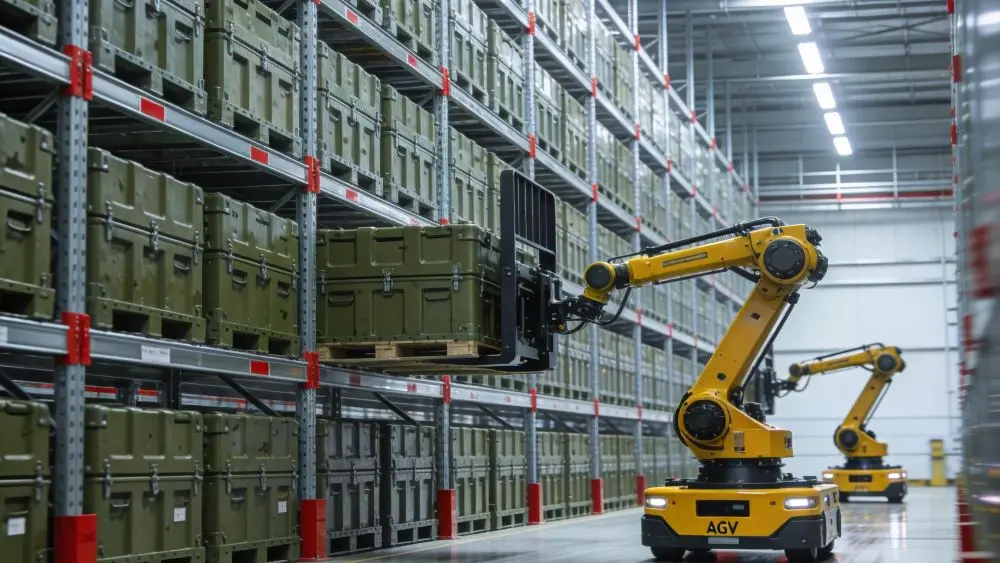
Supply chains form the backbone of defense readiness. Without parts, fuel and ammunition, even the most advanced military force stalls. But these days, defense organizations often lag behind private companies in overall planning maturity.
In comparison with the commercial sector, defense supply chains face unique constraints like rigid public budgets and procurement rules, as well as strict data security regulations, that hamper structured, unified supply chain planning. Although defense supply chains are unlikely to adopt all of the same strategies and systems used by commercial supply chains overnight, defense organizations can look to the private sector for incremental planning solutions that can help military logistics to become more efficient and resilient.
Defense vs. commercial supply chains
Steps to improve defense supply chain planning
Armies that want to mature their planning capabilities must take deliberate, incremental steps. They cannot fix everything at once. Focusing on small, robust process improvements builds a foundation for larger technological shifts later.
Integrating suppliers into the planning process is a critical first move. Defense organizations must deploy supplier knowledge tools to map their networks and identify risks. Embracing dual-sourcing and multi-sourcing strategies will help mitigate the risks associated with global supply chain disruptions. Defense planning has to be able to take into account industrial production capacity and distribution ability both in optimal, peacetime condition and under duress.
Planners must also bridge the gap between visionary strategic statements and reactionary, tactical problem-solving. This requires developing practical tools and running continuous simulations. While defense organizations might lack the budget or IT infrastructure for large software deployments, they can still adopt the core principles of data-driven planning by using lightweight tools to create "mini APS" systems. Lightweight tools and custom scripts can bridge the gap until heavier systems become viable. You do not necessarily need an expensive, heavy IT stack to start planning effectively.
Phased rollouts and scenario-based training also ensure success. Resistance to change runs deep in large bureaucracies, making change management a core discipline for any transformation. Instead of dropping a massive new process on an entire force at once, leaders should deploy and test changes in specific services. Training teams using realistic scenarios helps them understand exactly how new tools will help them during an actual deployment.
The future of defense supply chains
As defense organizations prepare to meet new challenges, they will need ongoing guidance from dedicated supply chain experts. These experts must offer practical steps for integration, budget alignment and procurement optimization that are in line with the operating environments and end goals of defense supply chains. You cannot tell generals how to run a war, but you can show them how to move their materials more effectively.
Defense supply chains face a unique set of formidable challenges. However, the path forward is clear. Defense leaders must prioritize supply chain planning as a core strategic advantage rather than a back-office function. Ultimately, defense organizations must learn to turn their constraints into advantages. By prioritizing process optimization, leveraging lightweight tools, and focusing on incremental wins, military logistics can achieve unprecedented levels of maturity.